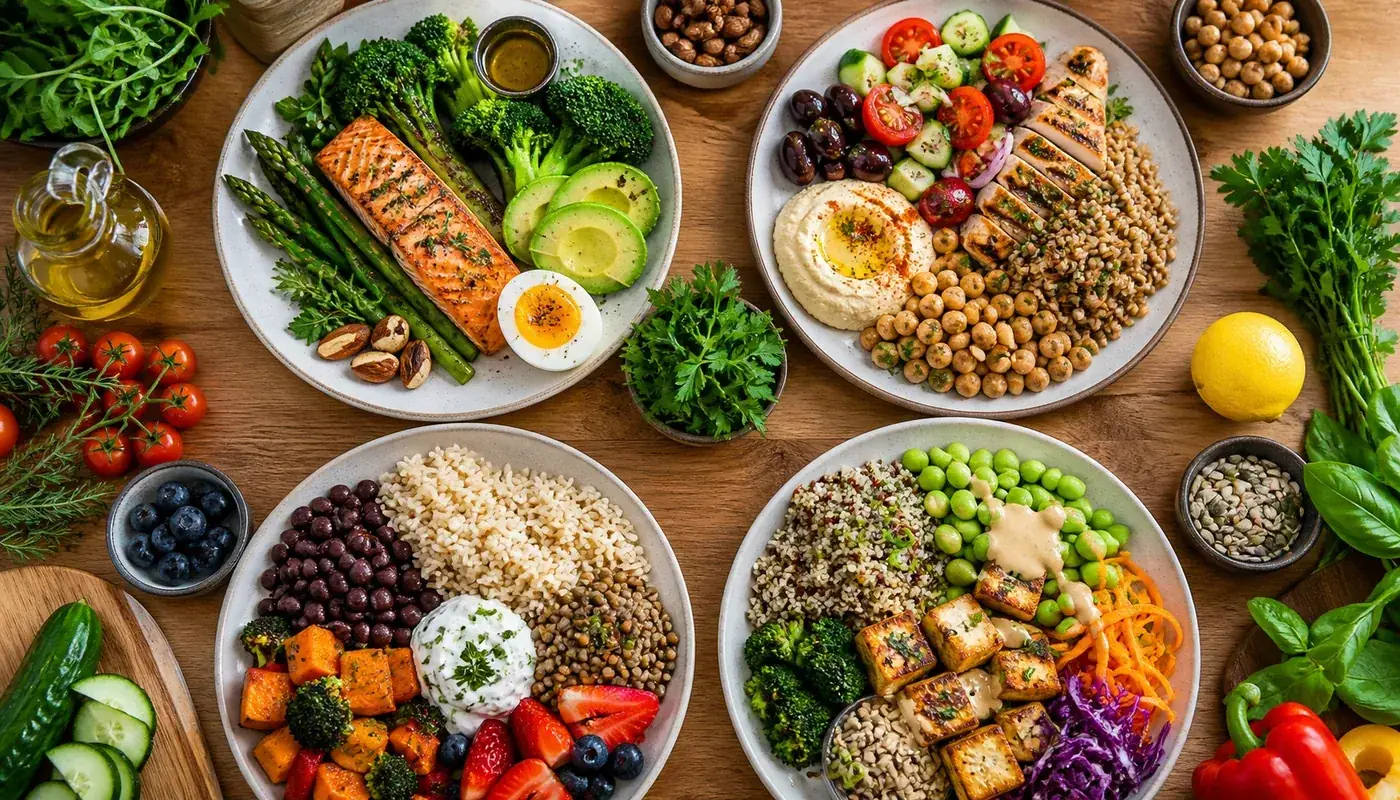
Keto, Mediterranean, Low-Fat, Plant-Based: What They Have in Common
Highlights
- Different eating patterns can support health, but their food choices matter more than a fashionable label.
- The better versions make room for vegetables, adequate protein, useful sources of fiber, and fewer sugary drinks.
- Similar weight loss does not mean identical effects on cholesterol, blood sugar, or long-term heart health.
- A satisfying pattern that fits your health needs, budget, and daily life is easier to maintain than a collection of strict rules.
Put four popular diets around a dinner table and they might argue about the breadbasket before anyone orders. Keto keeps carbohydrates low. Low-fat watches the oil. Mediterranean welcomes olive oil. Plant-based wants to know what is in the main course.
Yet their better versions have more in common than the food arguments suggest. They can turn distracted eating into intentional meals, improve the quality of everyday food, and give people a structure they can actually use. The useful question is what that structure helps you eat, not simply which name appears on the shopping list.
The name on the shopping list is not the thing doing the work. What the structure helps you eat is.
The short version
First, Know What Each Name Means
A ketogenic diet reduces carbohydrates enough to encourage the body to produce more ketones for fuel. Many versions allow roughly 20 to 50 grams of carbohydrate daily, although definitions and individual responses vary. Fat supplies much of the remaining energy. Ordinary low-carbohydrate eating is not necessarily ketogenic.
Mediterranean eating describes a flexible pattern built around vegetables, fruit, beans, whole grains, nuts, and olive oil, often with fish and smaller amounts of other animal foods. It is not a fixed percentage of fat or a requirement to eat food from one particular country.
A low-fat diet reduces the share of calories coming from fat. That can mean choosing beans, whole grains, vegetables, and lean protein. It can also mean choosing sugary snacks with a reassuring label. The phrase describes a nutrient target, not the quality of everything that meets it.
Plant-based eating puts plant foods at the center of meals. Some versions include animal foods; a vegan diet excludes them. Neither term automatically means low-fat, low-carbohydrate, or minimally processed. A lentil stew and a plate of fries can both be vegan, but they bring different things to dinner.
These categories can overlap. A Mediterranean pattern can be mostly plant-based, and a vegan pattern can be relatively low-fat. They are useful descriptions, not separate nutritional planets.
The Label Cannot Do the Food's Job
One shared opportunity is replacing foods that are easy to eat in large amounts without much lasting satisfaction. Sugary drinks, frequent sweets, and constant snack grazing can crowd out more nourishing meals under almost any dietary label.
The replacement matters more than the slogan. Swapping a sugary drink for water changes something meaningful. Swapping an ordinary cookie for an expensive keto cookie may change the carbohydrate count without doing much for the overall meal pattern.
Convenience is not the enemy, either. Frozen vegetables, canned beans, plain yogurt, tofu, and canned fish can make good eating much easier. Processing covers everything from freezing peas to manufacturing a candy bar; treating those as nutritional twins is not especially helpful.
Look at what a food contributes: protein, fiber, vitamins, minerals, useful fats, enjoyment, or some combination. Then look at how often it appears and what it replaces. One packaged item does not define an entire diet.
Protein Still Needs a Place at the Table
All four patterns work better when meals contain enough protein. Protein supplies the building blocks for muscle and other tissues, and it can help meals feel satisfying. Simply cutting carbohydrates or fat does not guarantee you are getting enough.
The source can vary. Fish, eggs, poultry, yogurt, tofu, tempeh, beans, and lentils can all contribute, depending on your preferences and dietary limits. Strict keto usually leaves less room for generous bean or lentil portions, while a plant-based pattern may use them as the main event.
A practical habit is to identify the protein in each main meal before adding the extras. A salad becomes more substantial with tofu, chickpeas, eggs, or fish. If weight loss is a goal, preserving muscle also depends on resistance exercise and avoiding an unnecessarily severe shortage of food. Protein cannot do all of that work alone.
Vegetables Are Common Ground; Fiber Takes Planning
Vegetables fit every pattern here. The details change, but a plate with broccoli, peppers, mushrooms, or leafy greens does not usually provoke a dietary identity crisis.
Fiber is where the differences become more noticeable. Mediterranean and many plant-based meals naturally include beans, whole grains, fruit, nuts, and seeds. Low-fat eating can include all of those, too. Strict keto limits several major sources, so fiber needs more deliberate attention through foods such as nonstarchy vegetables, avocado, nuts, and seeds.
That does not make the patterns nutritionally identical. A handful of seeds is useful, but it does not recreate the full variety of foods excluded by a restrictive plan. Broader food choice often makes adequate nutrition easier.
Increase fiber gradually if your usual intake is low. Suddenly doubling the beans may make your digestive system rather vocal. Smaller changes, repeated consistently, are often more comfortable than a complete pantry transformation over one weekend.
Fat Quality Matters Even When Fat Quantity Changes
Mediterranean eating is a useful reminder that a diet can contain a meaningful amount of fat and still support heart health. Olive oil, nuts, seeds, and fish bring a different nutritional package from a pattern centered on butter and processed meat.
For cholesterol, replacing saturated fat with unsaturated fat is generally more useful than simply declaring all fat bad. Replacing it with refined starches and added sugar does not offer the same advantage. A low-fat label, by itself, cannot tell you which replacement happened.
Keto also leaves choices to make. Building meals around fish, tofu, vegetables, avocado, nuts, and olive oil differs from relying heavily on bacon, butter, and cream. Even with thoughtful choices, some people experience a substantial LDL cholesterol increase on a ketogenic diet. Feeling energetic or losing weight does not make that change irrelevant.
Keto leaves real choices inside it. Fish, tofu, avocado, nuts and olive oil are a different package from bacon, butter and cream — and some people see a substantial LDL rise on keto regardless of which they choose.
Different Routes Can Lead to Similar Weight Loss
Both lower-fat and lower-carbohydrate approaches can support weight loss. On average, differences often become fairly modest over time, especially when both approaches emphasize food quality and receive similar support. That does not mean every individual responds in the same way, or that all low-carbohydrate diets are strict keto.
Weight loss still requires an energy deficit over time. The practical challenge is finding a way of eating that makes an appropriate intake comfortable and sustainable. Hunger, food preferences, sleep, medication, and the surrounding food environment all affect that experience.
Early scale changes can also be misleading. Cutting carbohydrates reduces stored glycogen and some of the water held with it, so an initial drop is not entirely body fat. Restoring carbohydrates can bring some of that water back without representing an instant reversal of fat loss.
An early drop on the scale is partly glycogen and the water stored with it. That is not the same as fat.
Worth remembering
And weight loss is not everyone's assignment. Better nutrition, strength, digestion, and stable energy can be worthwhile goals at a stable weight.
Shared Strengths Do Not Make Every Outcome Equal
There is stronger support for Mediterranean-style eating in reducing major cardiovascular events in people at elevated risk than there is for strict keto as a long-term heart-protection strategy. It would be misleading to turn a similar result on the bathroom scale into a claim that the two approaches have identical long-term effects.
Lower-carbohydrate eating can improve blood sugar and triglycerides for some people, particularly when it also supports weight loss. But an improvement in one measure can sit beside an unfavorable change in another. The whole picture matters.
Plant-based eating has the same need for detail. A pattern rich in legumes, whole grains, vegetables, and nuts is different from one dominated by refined grains, sugary drinks, and sweets. Removing animal foods does not automatically make everything left on the menu protective.
A Useful Plan Has to Survive an Ordinary Tuesday
Dietary rules can make decisions easier, but too many can make daily life harder. Consider your work schedule, cooking facilities, budget, family meals, and the foods you actually enjoy. A plan that requires a separate dinner every evening may become exhausting before it becomes a habit.
This is where the approaches share a practical strength: a little structure can reduce decision fatigue. A few dependable breakfasts, two or three lunches, and a short list of flexible dinners often help more than an elaborate menu that is never repeated.
For example, keep vegetables and a protein source at the center of a stir-fry. A Mediterranean or plant-based version might add brown rice and tofu. A lower-fat version can use a smaller amount of oil. A keto version might use cauliflower rice and an appropriate protein source, with unsaturated fat for additional energy. Seasoning still gets a vote in every version.
Restrictions Deserve a Nutrition Check
The more foods you exclude, the more deliberately you need to replace what they supplied. A vegan diet needs a dependable source of vitamin B12 from fortified foods or a supplement. Calcium, vitamin D, iodine, iron, and protein also deserve attention rather than an assumption that more vegetables will cover everything.
Major carbohydrate reductions require extra care with diabetes medication. Insulin and some other medicines can cause low blood sugar when food intake changes. Combining a ketogenic pattern with an SGLT2 inhibitor can increase the risk of ketoacidosis, sometimes without very high blood glucose. Arrange a medication review before making that change; do not adjust prescriptions on your own.
What a restriction obliges you to replace
- Vitamin B12, from fortified foods or a supplement, on a vegan pattern
- Calcium, vitamin D, iodine and iron, which vegetables alone will not cover
- Fiber on strict keto, through nonstarchy vegetables, avocado, nuts and seeds
- A medication review before a major carbohydrate cut, particularly with insulin
- Specific care with SGLT2 inhibitors, where keto can raise ketoacidosis risk
Kidney disease, pregnancy, a history of eating disorders, and other medical circumstances can also change which approach is appropriate. An eating pattern should accommodate your health needs rather than turn them into exceptions you are expected to ignore.
Borrow the Useful Parts
You do not need to sign up for every rule to use a diet's better ideas. Mediterranean meals can inspire more beans and olive oil. Thoughtful low-carbohydrate eating can encourage fewer sugary drinks and refined snacks. Low-fat cooking can introduce lighter preparations, while plant-based eating can broaden your range of vegetables and proteins.
Start with a change that solves an actual problem. If breakfast leaves you hungry an hour later, add protein and fiber. If vegetables rarely appear at dinner, find two preparations you enjoy. If the plan is financially awkward, use frozen produce and simple staples instead of specialty products.
The most useful common ground is a pattern that nourishes you, fits your circumstances, and leaves enough flexibility to keep eating well. Dinner can support your health without becoming a daily test of loyalty to a diet.