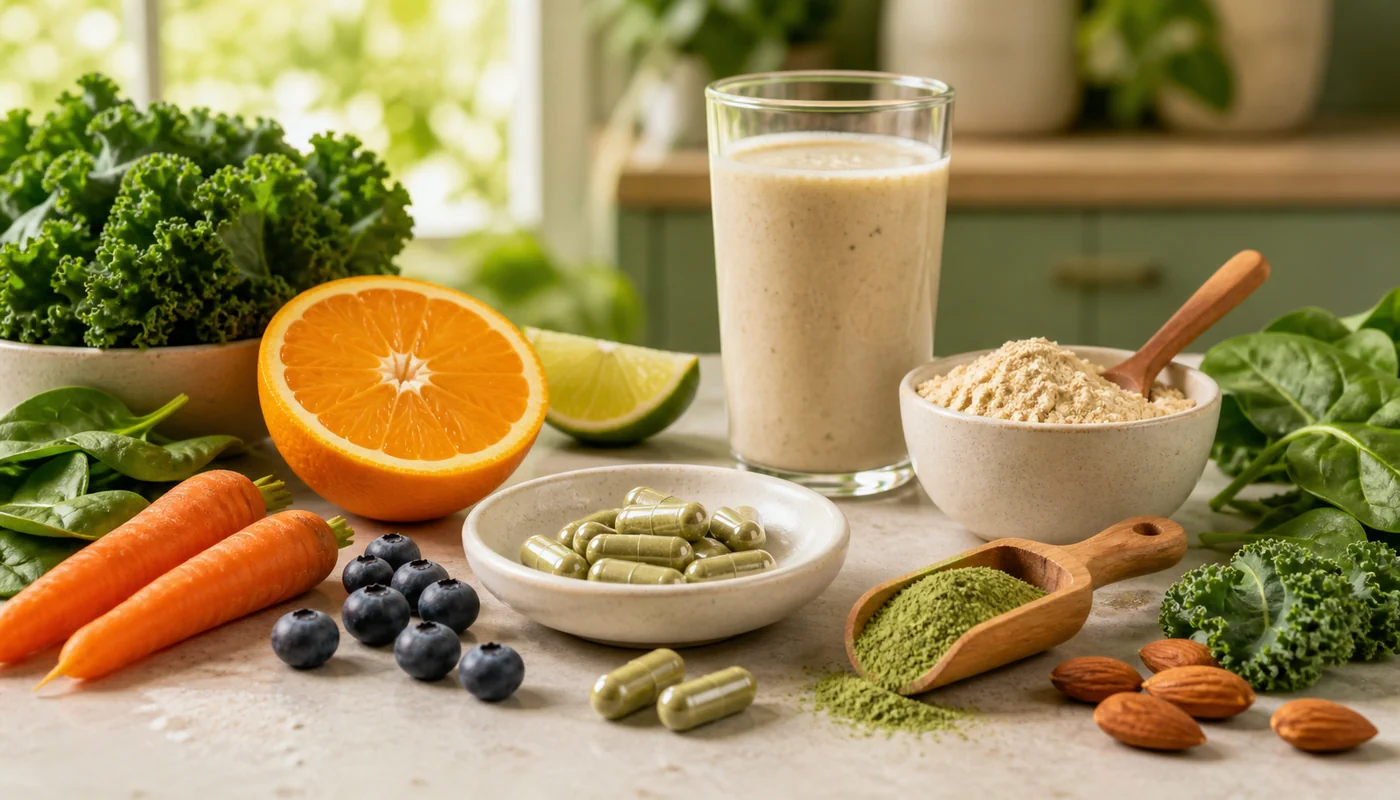
Plant-Based Supplements: Finding What Fits Your Everyday Life
Highlights
- Plant-based supplements include protein powders, fiber products, and botanical extracts, with different purposes and ingredients.
- The ingredient's form, amount per serving, and intended use matter more than a long list of plants on the label.
- A useful supplement solves a specific problem, such as making protein or fiber intake more convenient.
- Plant-based does not automatically mean vegan, allergen-free, or suitable for everyone.
A supplement shelf can make a simple shopping trip feel surprisingly complicated. There are leafy labels, impressive ingredient lists, and enough powder to give your kitchen a second personality. Somewhere in that lineup may be something useful. The trick is knowing what job you want it to do.
Plant-based supplements can be a convenient addition to an everyday routine. A protein powder might make a rushed breakfast more substantial. A fiber supplement might help close a consistent intake gap. The most helpful choice usually starts with a specific need, rather than the most ambitious promise on the front of the package.
Start with the job you want done. The right product is much easier to find once you know what you are asking it for.
The short version
What Plant-Based Actually Means
Plant-based supplements contain ingredients obtained from plants, including seeds, roots, leaves, fruits, and legumes. The category stretches from fairly simple products, such as pea protein or psyllium husk, to concentrated botanical extracts containing selected plant compounds.
That broad label does not describe one particular health benefit. A soy protein powder, a ginger capsule, and a fiber supplement do different things. Grouping them together makes sense when discussing their origins, but not when deciding how to use them.
The finished product deserves a closer look, too. A plant ingredient can sit inside a gelatin capsule or share a formula with animal-derived ingredients. If avoiding animal products matters to you, check the full ingredient list and vegan labeling. Think of plant-based as a starting description, with the details waiting on the back of the bottle.
Give the Supplement a Specific Job
Before comparing brands, try finishing a simple sentence: "I want this to help me get enough..." Protein and fiber fit neatly into that question. A vague goal such as feeling healthier is harder to match with an ingredient, an amount, or a useful measure of success.
Look at your actual week. Perhaps lunch often becomes crackers between meetings, or breakfast rarely includes a substantial protein source. Identifying the pattern makes it easier to decide whether a supplement, a food change, or a little meal preparation would be most convenient.
A supplement does not have to become a permanent subscription to be useful. It might suit travel, an unusually busy stretch, or a particular dietary restriction. Its value comes from the problem it solves in your life, not from how many other people have added it to theirs.
Plant Protein Can Make Busy Meals Easier
Pea, soy, rice, and other plant proteins are available as powders and blends. Their amino acid profiles vary, meaning they provide different proportions of the building blocks your body uses to make and maintain proteins. Soy supplies all nine essential amino acids; blends can combine complementary proportions from different plants.
You do not need a precisely matched protein combination at every meal. Eating enough protein from varied foods across the day helps meet your needs. Powders offer another way to reach that total when cooking, appetite, or scheduling gets in the way.
Compare the grams of protein per serving, not simply the size of the scoop. Flavors, fiber, and other ingredients also contribute to a powder's weight. A spoonful of powder and a spoonful of protein are not necessarily the same thing.
Make the Powder Fit the Meal
The best flavor is partly a question of where the powder is going. An unflavored option may work well in a smoothie with fruit and nut butter. A strongly sweetened vanilla formula might be less welcome in a savory meal. Your breakfast does not need to taste like a compromise.
Texture matters as much as the ingredient headline. Try a small package before committing to a large tub, and follow the mixing directions. Some products need a blender; others are easier to mix in a shaker. A convenient format is only convenient if you are willing to use it.
Keep the rest of the meal in view. Protein powder mixed with water supplies a different combination of nutrients than a breakfast with oats, fruit, seeds, and a fortified drink. A powder can contribute protein without needing to take over every other part of the meal.
Fiber Has a Different Kind of Appeal
Psyllium comes from the husks of seeds and forms a gel when mixed with water. It can help soften and bulk up stool, supporting easier bowel movements. Certain soluble fibers can also help lower LDL cholesterol when used in suitable amounts as part of an overall eating pattern.
Psyllium is one of the few supplements where the preparation is not optional. Mix it with the full amount of fluid on the label, commonly at least eight ounces, and never swallow the powder dry.
Preparation is an essential part of using psyllium. It is not suitable for someone with difficulty swallowing. Medication timing may also need adjustment, because psyllium can interfere with how some medicines are absorbed.
Give your digestive system time to adjust when increasing fiber. Beans, oats, vegetables, and fruit still deserve a place in the routine: they provide a mixture of nutrients and fibers that a single isolated ingredient cannot reproduce.
A Plant Extract Is Different From the Whole Plant
Herbs and spices can appear as dried powders, teas, liquid extracts, or concentrated capsules. These preparations are not interchangeable. Extraction uses a liquid, such as water or alcohol, to remove selected compounds; the result may later be concentrated or dried.
The plant part matters, too. A root extract and a leaf powder from the same species can contain different mixtures of compounds. Comparing them only by milligrams misses that distinction.
This is why familiar food use does not settle every question about a concentrated supplement. A seasoning scattered over dinner and a daily capsule can deliver very different amounts. Keep the preparation and intended purpose connected when weighing a product's usefulness. If you take medication, check for interactions before adding a concentrated botanical; the word natural does not answer that question.
Read Standardization Without the Hype
Some extracts are standardized to contain a stated amount of a particular compound. That information can help describe the product more precisely. It does not, by itself, establish that the compound produces the advertised benefit or that more of it works better.
Consider a hypothetical extract labeled as containing 20% of a named marker compound. In a 100-milligram serving, that would represent 20 milligrams of the marker. It would not mean the entire serving is that compound, and it would not tell you how much is absorbed.
A bigger number on one label does not make it the stronger product. It may simply be describing something different.
Worth remembering
Use standardization as one piece of the comparison. The exact extract, serving size, and intended effect still matter. When two products describe their ingredients differently, the larger number on one label may not represent a stronger or more useful option.
Look Past the Front Label
A short label check can answer questions that attractive packaging leaves open.
Four questions worth asking before you buy
- How many capsules or scoops make one serving?
- What amount of the main ingredient does that serving supply?
- Are individual ingredient amounts listed, or only the total weight of a blend?
- What else is included, such as sweeteners, allergens, or added vitamins?
A bottle containing 60 capsules may provide only 20 servings if the directions call for three at a time. A blend containing ten plants may sound generous while giving little information about the quantity of each one.
More ingredients also make it harder to work out which component fits your goal. A simpler formula can be easier to compare and easier to assess for tolerability. There is no prize for buying the longest ingredient list.
Choose Quality Checks That Answer Real Questions
Independent testing can provide useful information about whether a supplement contains what its label says and whether it meets specified limits for certain contaminants. Depending on the testing program, manufacturing practices may also be checked.
Those checks address product quality. They do not guarantee that a supplement will deliver a particular health result or suit every person who takes it. Look for a clearly identified testing program and an explanation of what was checked, rather than relying on an unexplained badge.
Keep dietary needs separate from quality claims. Soy is a common allergen, and other plant ingredients can cause allergies as well. A vegan label does not mean a product is suitable for every allergy. Read the allergen information even when the front of the package seems to match your preferences perfectly.
Compare the Cost of a Usable Serving
Container price can hide a surprisingly large difference in everyday cost. Imagine one powder costs $24 for 30 servings, while another costs $18 for 15. The first works out to 80 cents per serving; the second costs $1.20. The cheaper container is more expensive to use at its stated serving size.
That calculation is only the beginning. If you are buying protein, compare servings that supply similar amounts of protein. If you are buying a botanical, different extracts may not be equivalent even when their serving prices match.
Food can be part of the comparison, too. Beans, tofu, oats, and seeds contribute more than one nutrient, although they may take more preparation. A supplement's convenience can be worth paying for. Deciding how much that convenience is worth is a personal budget choice, not a health competition.
Build a Routine You Can Evaluate
Adding several new supplements at once can make it difficult to identify what agrees with you. When possible, make one change at a time and keep its purpose clear.
- Write down the job. For a protein powder, success might simply mean that breakfast now reliably includes the protein you intended.
- Change one thing. Starting three products in the same week makes any result impossible to attribute to one of them.
- Follow the label. Use the stated directions rather than increasing the amount whenever the effect seems subtle.
- Check for overlap. Powders, multivitamins and other products often share added nutrients you are already getting elsewhere.
- Review at the bottom of the container. Did it solve the original problem, was it easy to use, and was it worth the cost?
Revisit the purchase when the container is nearly empty. A supplement earns its place through a useful role in an ordinary week. The kitchen cupboard does not need to become a collection of good intentions.