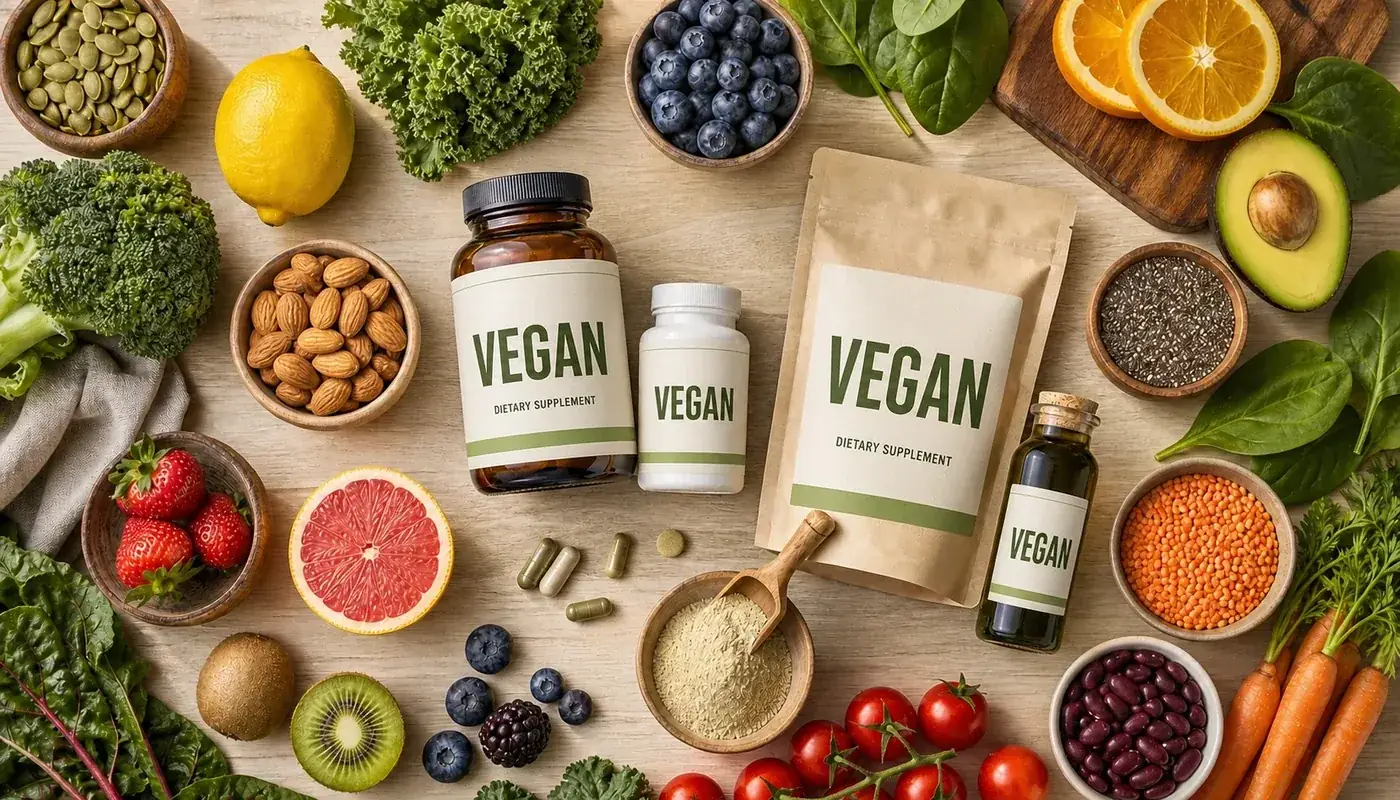
Vegan Supplements: A Practical Plan for Everyday Nutrition
Highlights
- A vegan eating pattern needs a reliable vitamin B12 source from fortified foods, supplements, or both.
- Vitamin D, iodine, calcium, iron, zinc, and omega-3 choices depend on the foods you eat and your individual needs.
- Vegan suitability applies to the whole product, including capsules and ingredient sources.
- A simple, targeted routine is easier to manage than a collection of overlapping supplements.
Eating vegan does not require a kitchen counter that looks like a supplement shop. It does call for a few deliberate nutrition choices, especially when it comes to vitamin B12. Once those choices become familiar, the routine can be pleasantly ordinary.
The useful starting point is the food you actually eat. Not the beautifully organized meal plan you meant to follow, and not someone else's smoothie. Your usual breakfasts, quick lunches, snacks, and dinners reveal which nutrients already have dependable sources and which may need a little extra attention.
One nutrient genuinely needs a plan. Most of the rest depend on what is already on your plate.
The short version
Start With a Food Check
Look over a few typical days and identify your regular protein foods, calcium sources, fortified products, and sources of iron and zinc. You do not need a perfect food diary. A realistic picture of your habits is more helpful than an unusually virtuous Monday.
- Pick three ordinary days. A busy Tuesday tells you more than the weekend you cooked properly.
- List what repeats. The breakfast you have four times a week is doing most of the work, for better or worse.
- Read the fortified labels. Plant drinks, cereals and nutritional yeast vary between brands and even between varieties.
- Note the real portion. A splash in coffee is not the full cup the panel describes.
Fortified foods can make a meaningful contribution. These are foods with nutrients added during production, such as a plant beverage containing calcium and vitamin B12. Fortification is a practical nutrition tool, and it can reduce the number of separate supplements you need.
Check the serving you actually use. Brands and varieties can differ, too. When a regular purchase changes, take another look at its label rather than assuming the nutrient content stayed the same.
Make Vitamin B12 Dependable
Vitamin B12 supports normal nerve function, red blood cell formation, and DNA production. Unfortified plant foods are not reliable sources. A vegan routine therefore needs dependable B12 from fortified foods, a supplement, or a combination of both.
Nutritional yeast is the classic trap. Some products have B12 added and some do not, and the packaging looks much the same either way. Check the panel on the tub you actually buy.
The same distinction applies to plant drinks and breakfast cereals. A food's reputation as a vegan staple does not tell you whether it supplies this particular vitamin.
Consistency matters more than an occasional large serving of a fortified food. Choose a reliable plan that fits your habits. Adequate B12 helps the body function normally, but extra B12 is not a guaranteed energy boost when your intake and status are already sufficient.
Choose a B12 Routine You Can Keep
B12 supplements come in several forms, including tablets, drops, and products that dissolve in the mouth. Cyanocobalamin is a stable, commonly used option that the body can convert into active forms. A more elaborate name or a higher price does not automatically make another option a better fit.
Serving amounts and frequency belong together. B12 absorption is not a simple one-for-one calculation, so a product intended for less frequent use should not be treated as interchangeable with a daily product merely because the label numbers differ.
Follow an appropriate product schedule and make it easy to remember. A reminder beside a familiar routine can help, provided the supplement is stored as directed and kept out of children's reach. The winning format is the one that supplies what you need and reliably gets used, not the one with the fanciest delivery system.
Check Vitamin D and Its Source
Vitamin D helps the body absorb calcium and supports bone health. The amount you obtain from sunlight varies with factors such as season, location, skin pigmentation, clothing, and time spent outdoors. A sunny lifestyle is not a precise measure of vitamin D intake.
Fortified foods and supplements can help meet needs when food and other sources are insufficient. The appropriate amount depends on individual circumstances; very high doses are not a useful default simply because vitamin D is important.
For vegan suitability, the letter after the D is not the whole story. What matters is where it came from.
A clearly labeled vegan product makes that distinction easier to navigate, and saves reading the small print every time you restock.
Keep Omega-3 Choices Clear
Omega-3 fats come in several forms. Flaxseeds, chia seeds, and walnuts supply ALA, an essential omega-3 fat. The body can convert some ALA into EPA and DHA, but the conversion is limited and varies between people.
Algae oil offers a direct vegan source of DHA, and some products provide EPA as well. It can be an option for people who want these forms without fish oil, although that does not make it an automatic requirement for every vegan adult.
Compare the listed EPA and DHA amounts, not just total oil weight. In a hypothetical capsule containing 1,000 milligrams of algae oil, only part of that weight might be DHA or EPA. The supplement panel should tell you how much of each is present. That detail is more useful than a large number on the front label.
Give Calcium a Regular Place
Calcium supports bones and teeth and is involved in muscle and nerve function. Vegan sources can include fortified plant beverages, calcium-set tofu, and certain green vegetables. Their contributions vary, so it helps to identify a few dependable foods you enjoy rather than relying on an occasional serving.
Tofu illustrates the value of a quick label check. Calcium content depends partly on how it is made; not every tofu product provides the same amount. Plant beverages also differ in fortification. Use the nutrition panel and the actual portion to understand the contribution to your day.
If a supplement is needed to close a gap, the form can affect how it is used. Calcium carbonate is best taken with food, while calcium citrate can be taken with or without food. The goal is to complement your intake, not automatically add the largest available amount.
Remember Iodine Without Adding More Salt
Iodine is needed to make thyroid hormones. A vegan diet can fall short when it excludes common iodine sources and does not include dependable alternatives. Iodized salt can contribute, but sea salt and specialty salts are not necessarily iodized.
Check the label rather than judging by the salt's color or origin. If you use salt, choosing an iodized version can help provide iodine without increasing the amount of salt you eat. For someone limiting salt, a measured iodine supplement may be a more practical option than trying to obtain more iodine by adding extra salt.
Seaweed is less predictable. Iodine content varies widely, and kelp can supply excessive amounts. A clearly stated quantity is easier to manage than an uncertain seaweed dose. Existing thyroid conditions make individual iodine choices especially important; more is not automatically better for thyroid function.
Match Iron to Your Actual Needs
Beans, lentils, tofu, seeds, and fortified foods can supply iron. Plant foods provide nonheme iron, which is generally absorbed less readily than the heme iron found in animal foods. Vitamin C helps the body absorb nonheme iron.
That makes ordinary meal combinations useful. Add peppers to a bean bowl, tomatoes to lentils, or a vitamin C-rich fruit alongside a meal. These small choices can improve the usefulness of the iron already present without turning dinner into a complicated calculation.
Iron supplementation is more individual than B12 planning. Menstrual blood loss, pregnancy, absorption problems, and other factors can change needs. Fatigue alone does not identify an iron shortage; blood testing can help clarify whether extra iron is appropriate. Avoid taking high-dose iron just in case, and keep iron-containing products securely away from children.
Include Zinc in the Food Rotation
Zinc helps with normal immune function, wound healing, and making proteins. Beans, nuts, seeds, and whole grains can contribute. These foods also contain phytates, compounds that can reduce the absorption of certain minerals, including zinc.
That is a reason to plan a varied intake, not a reason to remove beans from dinner. Food preparation methods such as soaking and fermentation can reduce phytate content. Familiar foods and ordinary cooking habits can therefore play a useful role in mineral nutrition.
Soaking beans and letting bread rise properly are mineral nutrition too. They just do not come with a label.
Worth remembering
A zinc supplement may suit some diets, but it should account for what is already supplied by a multivitamin or other products. Taking high amounts over time can lower copper levels. A measured plan is more useful than routinely reaching for the strongest tablet on the shelf.
Decide Whether Protein Powder Would Help
Tofu, tempeh, beans, lentils, soy foods, nuts, and seeds can all contribute protein. Eating varied protein sources across the day helps provide essential amino acids. You do not need to pair particular plant proteins perfectly at every meal.
A powder can be handy when your schedule, appetite, or activity level makes it difficult to eat enough. It can also make a quick breakfast easier. Its purpose is to help meet a need, rather than to make an already adequate diet look more complete.
Compare protein grams per serving and consider what you will mix it with. Some powders include added vitamins, minerals, or other active ingredients, so check for overlap with your existing routine. An uncomplicated protein product may be easier to fit into a plan that already covers the nutrients you need.
Check the Whole Product for Vegan Suitability
The main nutrient is only part of the formula. Capsules may contain gelatin, vitamin D3 may have an animal source, and omega-3 products may contain fish oil. Other ingredients can also affect whether a finished supplement matches vegan preferences.
Look for a complete ingredient list and clear vegan labeling or certification. Certification can help with animal-origin questions, but it does not mean a product is free from all allergens or guaranteed to produce a health benefit.
Vegan and plant-based are not identical descriptions in every context. Some vegan nutrients are made through fermentation or other manufacturing processes rather than extracted directly from a plant. Their usefulness depends on the nutrient supplied and the finished formula, not on whether the packaging features a leaf.
Keep the Routine Simple Enough to Last
A multivitamin can combine several useful nutrients, but it is not automatically a complete solution. Check its actual contents. It may supply B12 and vitamin D while providing little calcium, no meaningful protein, or an iodine amount that still needs to be considered alongside food.
The nutrients worth having a plan for
- Vitamin B12, from fortified foods, a supplement, or both
- Vitamin D, with the source checked for vegan suitability
- Iodine, from iodized salt or a measured supplement rather than seaweed
- Calcium, from a few dependable foods you actually enjoy
- Iron and zinc, from varied foods and sensible meal combinations
- Omega-3, comparing EPA and DHA amounts rather than total oil weight
Compare the full routine before adding another bottle. Write down each product, its serving, and overlapping nutrients. Include fortified foods in that picture. This makes it easier to spot unnecessary duplication and to decide whether one combined product or a few targeted choices would be more convenient.
The aim is a small set of dependable habits: foods you enjoy, a reliable B12 plan, and additional support where it has a clear purpose. Once those pieces fit your everyday life, nutrition can spend less time on your to-do list and more time quietly taking care of you.